Play Curve Tuning
Skill windows, bonus timing, ticket payout, and replay motivation are tuned together so guests feel progress without damaging operator margin.
Innovation Lab
The Ice Games Innovation Lab tests controls, ticket pacing, firmware rollback, lighting durability, and cashless reader behavior under conditions that resemble a busy family entertainment center instead of a quiet showroom.
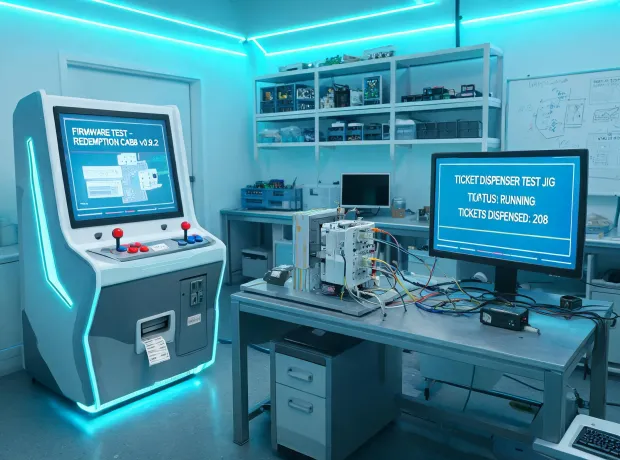
Ice Games prototypes are watched from both sides of the cabinet. Designers study whether a player understands the challenge within seconds, whether the reward moment feels earned, and whether the cabinet invites a second attempt. Engineers study heat, cable routing, motor wear, display brightness, and whether a technician can replace a high-use assembly quickly. Operators then review projected play count, payout, and peak-hour staffing impact.
That loop keeps innovation practical. A new light show, sensor mode, cabinet wrap, or leaderboard concept is only useful if it also survives cleaning, reset cycles, cashless reporting, and local service realities. The lab's job is to turn that complexity into a product that feels simple on the floor.
The lab review is intentionally concrete. Ice Games starts with the buyer's intended site: square footage, guest age mix, card reader platform, prize strategy, staffing level, service capability, and opening date. From there the team demonstrates cabinet families, explains the tradeoffs in ticket velocity and service access, and builds a short list that can be moved into quoting. The process is especially helpful for venues refreshing an existing game room because it reveals which machines should be retired, which should be repositioned, and which new attraction can become the next anchor.
Players and operators run the prototype under timed sessions while lab staff record reaction, reset, and queue signals.
Technicians open the cabinet, replace common assemblies, inspect harness paths, and document tool access.
Finance assumptions are modeled against average swipe value, target payout, and seasonal traffic curves.
Ice Games can review a new build, a refresh, or a route deployment with the same prototype discipline used for new cabinet development.
Schedule Lab Review